
Here's the Argument, Settled
One of you thinks that fraying cable or the roller that's been grinding since August can wait until spring. The other one wants it handled now. Here's what waiting actually costs: if a cable lets go mid-winter, the door doesn't ease down — it drops, fast, under the full weight of the panel. That can land on a bumper, a bike, or a foot. And getting someone out for an emergency call during a nor'easter, after hours, with a door stuck halfway open and snow blowing in, costs more than a scheduled repair would have. A planned cable or roller replacement typically runs in the $150–$350 range nationally depending on parts and labor. An emergency after-hours call to deal with a door that's already failed usually adds a premium on top of that, plus whatever damage happened when it came down. Waiting isn't free. It's a bet, and winter raises the odds against you.
What a Fraying Cable Actually Looks Like
This isn't a maybe. A cable in trouble shows real signs: visible broken strands near the bottom bracket, little hair-like wires sticking out, rust spots along the length, or kinks where it's been rubbing against the drum wrong. You might also notice the door sitting crooked when it's down — one side lower than the other — because one cable is stretching or slipping while the other holds steady. If you see any of this, the cable isn't going to fix itself, and it's not something to lubricate your way out of. Cables under tension that fail do so suddenly, not gradually.
Worn Rollers: The Quiet Rumble Before the Big Bang
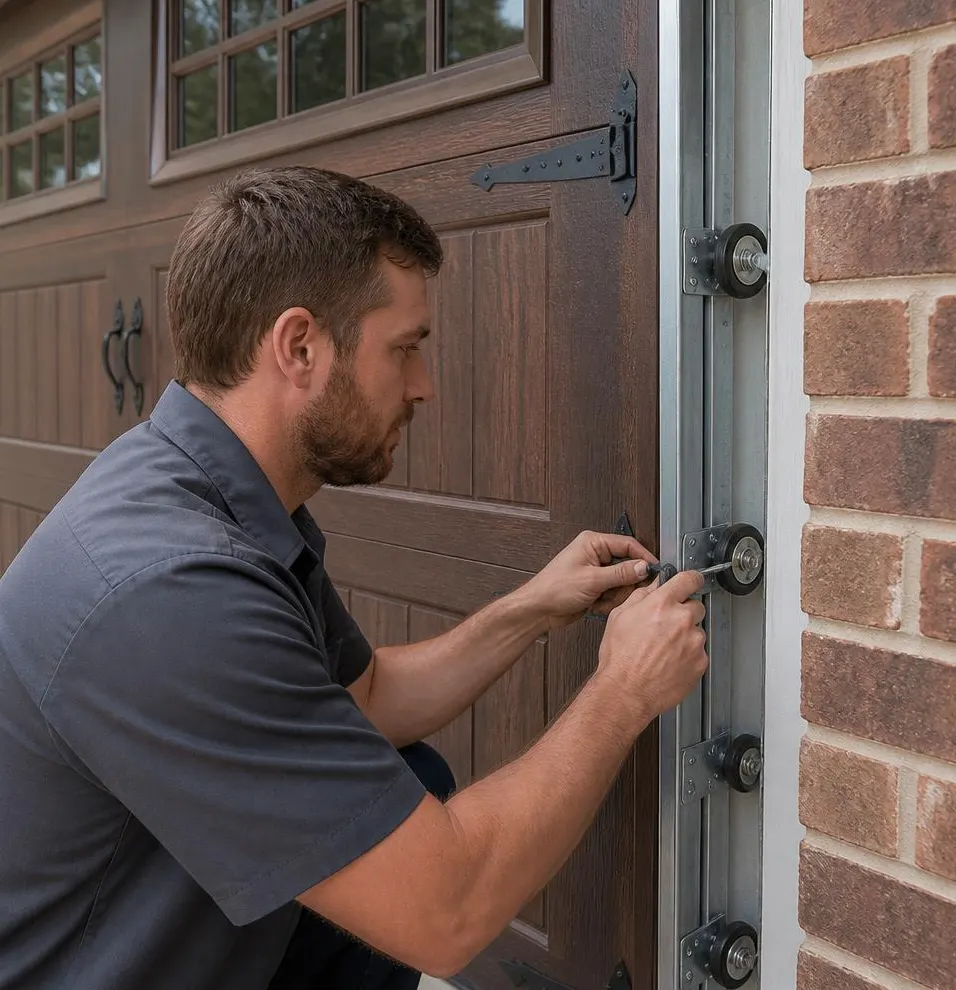
Rollers are the unglamorous part nobody thinks about until they're grinding loud enough to hear from the kitchen. Warning signs include a jerky, stuttering motion as the door travels, a grinding or squealing noise (especially on older steel rollers without sealed bearings), visible flat spots on nylon rollers, or a door that looks like it's wobbling slightly in the track instead of gliding straight. Worn rollers don't usually cause the dramatic failure a cable does, but they put extra strain on the opener, the track, and yes — the cables — because everything in the system is working harder to compensate for a part that's not doing its job.
Why This Time of Year Makes It Worse
Heading into another Butler County winter, every one of these weak points gets tested harder. Freeze-thaw cycles make metal contract and expand repeatedly, which adds stress to cables that are already compromised. Road salt tracked in on tires or carried on the wind settles into hardware and accelerates rust on cables, rollers, and tracks that aren't sealed. Cold air also thickens old lubricant until it barely does its job, so rollers that were merely noisy in September start binding and grinding by December. If your house has its original garage door and hardware — common in a lot of the older housing stock around here — the metal components have had years of freeze-thaw and salt exposure already working against them, which is exactly why problems that seemed minor over the summer tend to turn into real failures once the cold settles in.
What You Can Safely Check Yourself
There's a real line between homeowner maintenance and technician-only work, and it matters.
- Safe to do: Visually inspect cables and rollers for fraying, rust, or flat spots without touching the cable itself. Lubricate rollers, hinges, and track with a silicone or lithium-based garage door lubricant (not WD-40, which washes away grease rather than replacing it). Tighten any visibly loose bolts on the track or hinges. Run a balance test: disconnect the opener, lift the door halfway by hand, and let go — it should stay put. If it drops or shoots up, the spring tension is off, and that's not a DIY fix.
- Not safe to do: Touching, adjusting, or attempting to replace cables or torsion springs. These are under extreme tension and have caused serious injuries to homeowners who treated them like a regular bolt or cable. If a cable is frayed, or the balance test fails, that's a call-a-technician situation, not a weekend project.
When to Call Mars Garage Door
If you've spotted frayed strands, rust on the cables, a door that closes crooked, or rollers that grind and stutter, it's time to get it looked at before the next cold snap turns a known issue into a sudden one. Mars Garage Door handles both Garage Door Repair for cables and rollers that are already showing damage, and Garage Door Maintenance visits that catch this stuff early — checking cable condition, roller wear, track alignment, and spring tension in one visit, then lubricating and tightening what needs it. If the inspection turns up a spring that's reaching the end of its life, we'll walk you through Spring Replacement options before it becomes an emergency call in the middle of a January storm.
If you're in Mars, Cranberry Township, Evans City, Zelienople, Butler, Adams Township, Valencia, or Wexford and you've got a cable or roller situation you've been arguing about, settle it the easy way — call Mars Garage Door and get it checked before winter makes the decision for you.